A View on Abortion
- wacome
- May 8, 2022
- 11 min read
Updated: Aug 2, 2022
I am a man, and although some say that men, being incapable of pregnancy, are not entitled to express opinions on the morality or the legality of abortion. Nonetheless, I will do so, on the view that I was once a fetus and thus belonged to the class of entities whose destruction is at issue in some abortions.
The issue is complex in virtue of having metaphysical, moral, and legal aspects.
To begin, three things seem beyond reasonable dispute:
(1) What begins to exist at conception is not a person.
(2) What exists at some point in gestation prior to birth is a person, in essentially the same sense that a neonate is a person. (As I say below, this is a forensic, in contrast to a metaphysical, sense of “person.” A metaphysical understanding of personhood that implies infants are not persons and thus which might justify infanticide is not in play here. We have moral reasons to operate with forensic concepts that count neonates as persons, but I will not argue that here, since abortion, not infanticide, is at issue, at least not yet.)
(3) The organism that begins to exist at conception gradually becomes a person prior to birth. There is no sharp line separating what is not already, and what already is, a person.
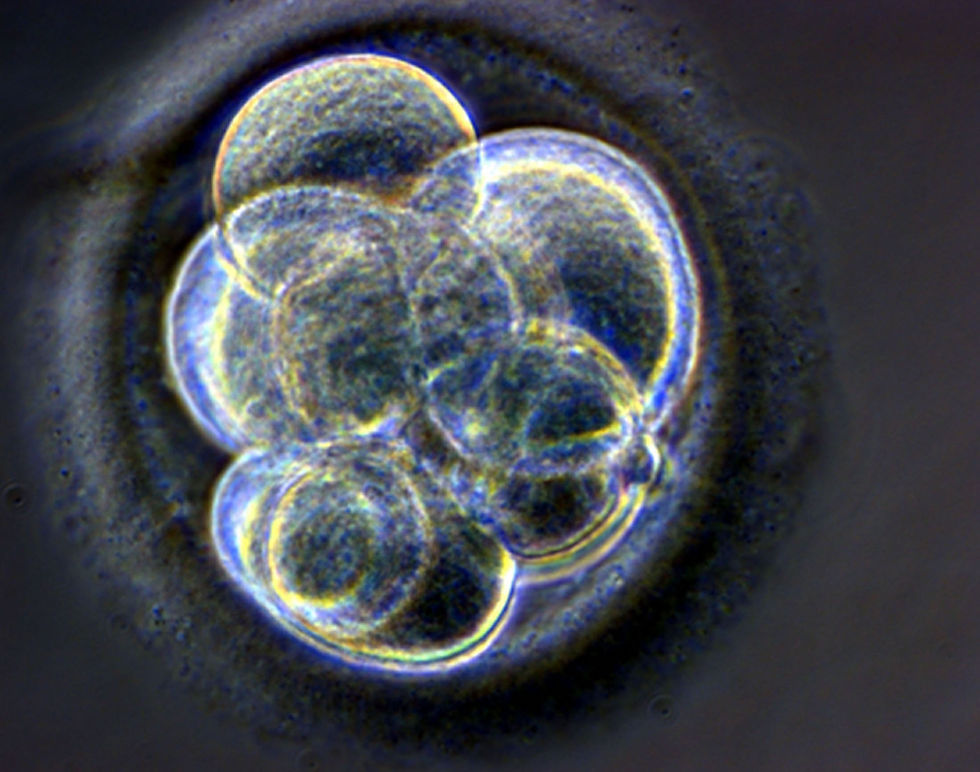
Opponents of abortion often assert “life begins at conception.” Taken strictly, this is false. There is life prior to conception. It occurs only if a living ovum and a living spermatozoon connect. But the claim that something comprised of a handful of cells is a person should not be taken seriously. To be a person, at least of the human variety, requires having a brain of some complexity. What comes into existence at conception is a human organism. The human organism exists prior to the existence of the person. That “pro-life” persons consistently describe what exists even at the earliest stages of pregnancy as a “child,” and thus a human person, shows a lack of understanding of this. (Similarly, after the person no longer exists, his body, a human organism, can continue functioning with a brain so damaged as to be permanently incapable of personhood.)
The term “human being” is ambiguous. It is often used as a synonym for “human person.” In this sense, a human being does not exist at conception, but gradually comes into existence between conception and birth. Taken literally, “human being” might instead mean “human thing” or “human entity.” In this sense, a human being does start to exist at conception, viz., a human organism, in contrast to, say, a feline or porcine organism.
This is essentially similar to the fact that there is no sharp line—even if there is a conventional, legal line—at which a child becomes an adult. There are facts about what properties an entity has, and our conventional (but not arbitrary) markers roughly mark those differences. We al know that a mature 17-year old may be more an adult than an immature 19-year old.
Another common claim, which is true, is that the early embryo or fetus is a potential person. However, those who point this out appear to think that this implies that the early embryo or fetus is a person of a particular kind, a potential person. But this false. An acorn, for example, is a potential oak tree, but it is not a tree. It might be illegal to cut down the oak trees in a forest, but this does not mean it’s illegal to destroy an acorn. To say that something is a potential person implies that it is not a person, but that in the natural course of events, it will become a person. (What occurs in the natural course of events need not be close to what usually happens since things often go wrong and impede the natural process. Most acorns do not become oak trees.)
The fact that what begins to exist at conception and for some time thereafter is only a potential person does not imply that it is worthy of no moral consideration, but it does imply that killing it is not killing an innocent human person.
Some will be disturbed by the fact that they came into existence gradually, that there was no moment when they began to exist, and even that there was a time when there was no objective matter of fact as to whether they existed. But this is true of all complex physical objects. They have the properties they have, and thus are things of a kind, only because many parts have come to be arranged in the ways necessary for them to have those properties. They exist only because more fundamental physical components, and ultimately the most fundamental physical entities, whatever they are, are arranged in certain ways. And they are rarely arranged in those ways instantaneously; certainly human persons are not. While it is an objective fact that a particular person did not exist, say, one day prior to conception, and it is an objective fact that she existed one day prior to birth, somewhere between the two there is a span of time--itself indefinite--during which there is no objective fact as to whether she existed.
That this sort of indefiniteness in the nature of things is a commonplace, even if some of us are reluctant to apply it to our very existence. Bill Gates is rich and a homeless man whose entire assets consist of a shopping cart full of old rags, bottles, and newspapers is not rich. These are paradigm cases, respectively, of someone being rich and someone not being rich. However, there is no non-arbitrary cutoff that separates the rich from the not rich. There are people of whom there is no matter of fact as to whether or not they are rich. This is not a matter of ignorance, as though if we only knew more we could say whether any given person is rich or not. The indeterminateness is an objective feature of reality. If we start with someone who has nothing and give him one penny after another, eventually he will become rich, despite the fact that a person cannot change from not being rich to being rich by being given a penny. (This is the sorites paradox.) A small developmental change to a fetus that is not yet a person cannot make it into a person, yet eventually those changes lead to it becoming a person.
It is never, or almost never, morally permissible to kill an innocent human being. Not every morally wrong action ought to be legally prohibited, but the morally wrong killing of innocent persons ought to be. If there were an identifiable point at which a human fetus transforms into an unborn human person, it would be clear that abortion is morally wrong any time afterwards. The difficulty lies in the fact that there is no such point, yet we must decide when abortion is the killing of an innocent person and should be legally prohibited.
One line of reasoning appeals to the fact that when it comes to avoiding killing innocent persons, we are obligated to err, if we err, on the side of caution. It concludes that because we do not know when the fetus becomes a person we ought to prohibit abortion from conception on. I have heard Ben Shapiro, among others, advance this reasoning. This is mistaken. The reasoning is sound only on the assumption that we never know that what’s killed by abortion is not a human person. But we do know that early in gestation the living human organism that is potentially a person is not yet a person. The argument is analogous to the argument that we ought never license anyone to drive a car because only adults should be licensed to drive and there is no objective fact of the matter as to when a child becomes an adult. Nonetheless, we have paradigm cases of persons too young to be allowed to drive, e.g., five-year-olds, and paradigm cases of persons not too young to be allowed to drive, e.g., twenty-five-year-olds. In practice, we seek a reasonable convention but don’t pretend that some magical transformation occurs the day a person becomes legally old enough to drive. We also have paradigm cases of what exists prior to birth not yet being a person, and of what exists prior to birth already being a person.
Abortion out to be permitted up to the point that it is no longer completely obvious that what abortion would kill is not yet a person. I offer no candidate for a point in gestation where this is the case. The best we can do is examine all available data on fetal brain development and make a judgment. Perhaps the advent of sentience—not to be confused with mere responsiveness to stimuli—is a reasonable candidate. (Here, the qualification I made in (2) above is in play: we seek whatever collection of characteristics in virtue of which we regard newborn infants as persons. (This is a less demanding conception of personhood than we might use in other contexts. I’m inclined to say that a necessary condition of personhood in the fullest sense involves dispositional self-consciousness, a characteristic we have no reason to ascribe to infants, let alone to the unborn. But that is a metaphysical conception of what it is to be a person, while what’s required here is a forensic conception.)
If what I have said so far is correct, early-term abortion kills a human organism that would, in the natural course of events, become a human person, but it is not a person, so killing it is not the killing of an innocent human person, which would be morally wrong as well as something it would be morally obligatory to prohibit legally. However, this does not imply that killing the fetus prior to personhood is morally indifferent. Obviously, many things are morally wrong, things we are morally obligated not to do, which do not involve killing innocent persons.
The fact that aborting a pre-person is not murder does not imply that killing it is a matter of moral indifference.
When a person dies, what remains, a non-functional body, is not a person, yet there are moral constraints on what we do to it. Even if I hated someone and am delighted that he died, it would be wrong to place the corpse on a float and have a parade in celebration of his demise. Perhaps we should say that treating the body in this way harms the person, even though he no longer exists. The corpse, being dead, would no longer be an organism, but parading the still somewhat functioning but brain-dead body would also be wrong. That which once was a person deserves certain kinds of treatment, while others are prohibited. Perhaps something analogous applies to fetuses that are not persons. Consider the uproar that occurred in response to the revelation that aborted fetuses were being sold for research purposes. Perhaps this is not contrary to moral obligation, something there is a moral obligation not to do, e.g., the fetal tissue is necessary for potentially life-saving medical research, but it would still morally matter.
The idea of an action being contrary to moral obligation, and thus wrong is familiar. But there is also the idea of an action not being one one is morally obligated to avoid doing yet being morally bad. We can call these acts offensive. Such acts would be the counterparts of acts which are supererogatory, ones that one has no moral obligation to perform, yet which it is morally good to do; they are “beyond the call of duty.” Perhaps an example of an offensive act is my refusing to help someone in ways that would be of no cost to me in time or effort, yet which would save my friend a great deal of trouble. Even if I was not obligated to help, my failing to do so makes me subject to moral disapproval.
It is always, or almost always, morally wrong, contrary to moral obligation, to abort the human organism that has become a person. And I want to say that it is morally offensive to abort the early stage, pre-personhood fetus in the absence of very good reasons to do so. Knowledge that the pregnancy is the result of sexual assault would be a very good reason, as would knowledge that continuing the pregnancy would impose severe costs on the woman, although I have no clear notion of what the criterion for “severe costs” might be. (Early-term abortion in pregnancies that result from incest where the girl or woman has been sexually assaulted, which would be automatic in the case of an underage girl, would not be morally offensive, while it would be if the pregnancy resulted from incestuous intercourse on the part of consenting adults.) Whether sexual assault or risk to the life of the prospective mother should override the judgment that is it morally wrong to abort a fetus that already is a person is a further question. This is a difficult matter, but it seems to me that once we lack good reasons to say that what’s being killed is not yet a person, killing it seems morally essentially similar to killing a newborn baby. If we imagine a scenario in which a mother will certainly die unless her infant child is killed, we would surely say that killing it would be morally wrong. It’s wrong to kill one innocent person to save the life of another. Similarly, in a scenario in which a mother discovers, after it is born, that her child it the product of incest or sexual assault—perhaps she only now learns that while she was comatose she was raped and impregnated by her brother—we would make the same judgment: it would be wrong to kill the child. The location of the child appears to make no morally relevant difference. Tragedy is sometimes unavoidable, but if we are forced to choose between killing and letting die, we ought to choose letting die. On the other hand, if we know that the mother and the unborn child will both die if the pregnancy proceeds to term, then abortion seems justified. It would be a choice between three evils: both mother and child die, the mother dies, the child dies. There is, in general, no clear consideration to decide between the latter two outcomes. Cases where the mother living and the child living are in conflict are, thankfully, rare, but when they occur they very difficult because typically what’s known are only imprecise probabilities. Although I believe that the moral truth, when it exists, possess a kind of objectivity, I do not suppose that it is any more free of indeterminacy than judgments about whether a person is rich, or whether a person has begun to exist. There are, I suspect, cases where there is no objective matter of fact as to whether an act is morally right, wrong, or indifferent. In such cases, one would have a moral obligation, but it would be an obligation to become aware of any facts that might be morally relevant and to conclude that there is no moral fact of the matter only after serious reflection. So long as this obligation is satisfied, it is not the state’s business to second guess the decision.
Above, I criticized those on the “pro-life” side for confusion about when life begins and about potentiality, and for having unreasonable beliefs about when persons begin to exist. The errors on the “pro-choice” side seem to me worse. Those on this side are often simply evasive, refusing to focus on the question of what abortion kills. Or they assume, without any argument I can detect, that what is killed is not a person, and that one becomes a person simply by exiting its mother’s body. That people possess a general right to choose what is done to their bodies is true and important, but obviously this right is morally, and ought to be legally, constrained by the effects of our choices on other persons. “My body, my choice” does not mean I am entitled to plant my fist on some other person’s nose. Any right to privacy, irrespective of whether it is implicit in the U.S. Constitution, is similarly constrained by the rights of other persons not to be harmed in certain ways. When someone is driving erratically, whatever right to privacy he has does not make him immune from being tested for blood alcohol content. The fact that he might harm other persons limits the right.
Another failing on the “pro-choice” side is a tendency to regard pregnant women as having no responsibility whatsoever. Effective birth control is readily available, as are reliable pregnancy tests. Thus, a female who does not want to become pregnant and has sex ought to use birth control and, if not, to test for pregnancy soon after the fact so an abortion is possible before it involves killing a person. In the ideal, reliable tests will be readily available well before the fetus becomes a person. But in any event, the “morning after” pill terminates any pregnancy that is underway well before a child comes into existence. No doubt, when it comes to sex, clear thinking about responsibilities and future possibilities is not always easy. Nature is not fair; females, because they can get pregnant, have responsibilities males do not have, or can at least can more easily avoid. But it is wrong to deny these responsibilities when doing so involves the killing of innocent persons.


Comments