A Curious Incuriosity
- wacome
- Apr 7, 2021
- 11 min read
Updated: Apr 24, 2021
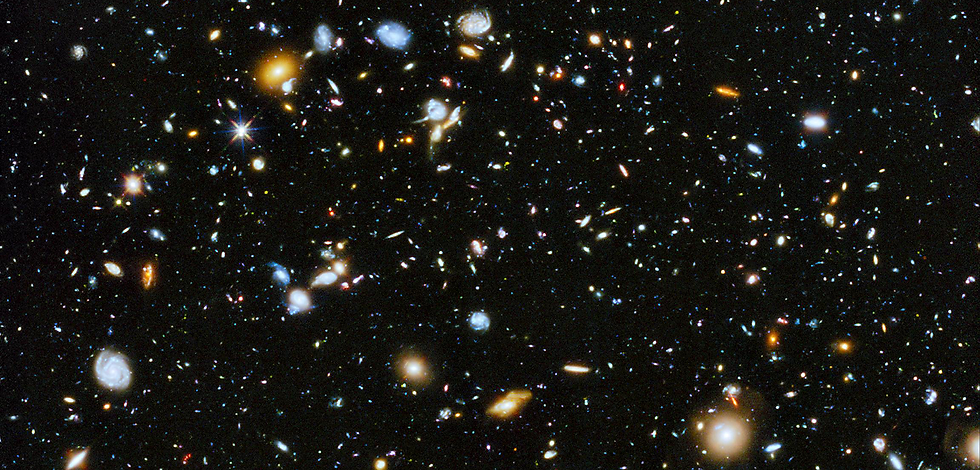
I am curious about a certain lack of curiosity.
Why does the universe exist? In more dramatic terms, why is there something rather than nothing? It seems to me that this ultimate question at one time or another exercises the mind of any intelligent person endowed with a normal degree of curiosity. Martin Heidegger wrote that this question is not available to those of us who believe in God. I take him to mean that we do not ask, not because we think it is unimportant, meaningless, or unanswerable, but because to believe in God is to believe we have the answer. The universe exists because God freely chose for it to exist, and God exists because his non-existence is an absolute impossibility. The notorious German philosopher thinks that the question rightly exercises those who do not believe in God. However, in my experience, secular persons exhibit what seems a surprising lack of interest in this question. This is the lack of curiosity that puzzles me.
I might be mistaken, and the question does engage persons of the sort I have in mind, but they keep their musings on it to themselves, and it doesn’t find its way into their public discourse. But I doubt that this is the case. The philosophers and scientists I have in mind are very curious people, who seek answers to questions great and small, and they do not hesitate to express opinions on ultimate matters, particularly on the—in their view—non-existence of God. I find it surprising that those who readily dismiss one familiar answer to the ultimate question say nothing in favor of any other answer, or at least do not opine on the problem’s inadmissibility or certain lack of an answer.
So, I hypothesize as to what might explain this curious incuriosity.
One possibility is that they sense that the theistic answer is inevitable and, not wanting to believe that God exists, they avoid the question. This would be a kind of intellectual dishonesty and I am not ready to ascribe such to thinkers I much admire and that seem to me in other matters scrupulously honest. Instead, they might be convinced that the theistic answer is the best answer but also convinced, for other reasons, that there is no God. One can reasonably judge that the best answer is not good enough, and shrugging one’s shoulders, leave the question alone. But why don’t they seek an alternative answer? One should hardly expect many to make addressing this question their life’s work, but I wonder why we never see indications that the question haunts them.
Thinkers of the sort I have in mind are, under one description or another, philosophical naturalists. They believe—as I do—that science is human beings’ most reliable way to know contingent reality. So they might judge that we simply must wait for science to someday provide the explanation. However, science explains by subsuming what’s explained under the laws of nature, and at face value, there is no scientific explanation of why the fundamental laws of nature, whatever they are, are what they are. The superior reliability of science as a way of knowing does not imply that it can answer every question. Perhaps they suspect that at some point we’ll discover that science somehow explains its own laws, and that they, in turn, explain why the universe exists
.
Another possibility is that they see the question as ill-conceived, because while it’s reasonable to ask of any item in the universe why it exists, one we know the answers to all such questions, there is no need to ask why their sum, the universe as a whole, exists. It seems to me that modern cosmology undermines this approach, insofar as it portrays the universe as a whole evolving in time from its simple beginning. Everything it contains is composed of and derived from the microscopic quantum of primal energy. The surprising phenomenon of ubiquitous quantum entanglement seems to me to make it particularly hard not to conceive the physical universe as one thing, and not an ensemble of distinct entities.
Someone might believe that Big Bang cosmology answers the question: this universe exists because the initial singularity occurred and, given nature’s laws, over the past 13.76 billion years, it evolved into what it is today. Thus, the matter is settled and there’s nothing more to say. However, this leaves unanswered why the singularity occurred and why the laws that governed the results are what they are. That originating event might be a random fluctuation in the quantum field, but, while it might resemble what we think of us nothing, it isn’t; it’s replete with properties. Further, we want to know why the laws of quantum mechanics are what they are and, indeed, why there are any natural laws at all. It may well be that in the primeval universe our concepts of space, time, and causality break down, and it’s a mistake to seek a causal explanation. But not all explanations are causal; we still seek a reason why these things are true, why they are this way, rather than some other, as far as we can tell, possible way, or no way at all because there was nothing.
Another possibility is that they believe that the existence of the universe is a “brute fact,” thereby denying the possibility of an explanation. The universe just is, and there is no further explanation. Its existence is contingent; it does not have to exist, but it does. This violates the principle of sufficient reason: whenever something is true, there is a reason why it’s true. They might hold that while we are innately disposed to accept the principle, this is because it was adaptive for our ancestors, living in the upper Pleistocene, to believe it. Always assuming that there’s an explanation for what happens in one’s local environment tends to keep one alive long enough to reproduce, even if, like many beliefs natural selection has endowed us, it does not apply universally. When you see a paw print on the ground, assuming that it appeared out of nowhere, rather than having a cause, such as a predator in the vicinity, is detrimental to fitness. But the fact that things in the ancestral environment had explanations does not imply that everything, especially things far beyond human experience, such as the origin of the universe, have them. The principle of sufficient reason does not look like something that could be proved. But it remains something we cannot, in practice, discard.
Some deny the applicability of the modal properties contingency and necessity to things, in contrast to elements of our conceptual and linguistic frameworks. If this is right, then “The universe is contingent” makes no sense. There are necessarily (or contingently) true statements but no necessarily (or contingently) existing things. Nonetheless, I don’t see how this disposes of the question of why the universe exists. If we believe that something necessarily exists, then there’s no need or point to asking why it does. And if we regard the existence of something as contingent, that burdens us with the question why it does when it does not have to. However, this does not imply that, having banished the modal claims, we don’t still need to ask why things, including this universe, exist.
The secular naturalist typically endorses the scientific project of making the world intelligible by revealing why things happen as they do. It’s not acceptable scientific practice to hold that certain phenomena “just happen.” Not even quantum-mechanical events “just happen;” they have known causes. What’s not known (and according to the standard, Copenhagen interpretation cannot be known because there is no further fact) is why the cause had this effect at this moment rather than some other possible effect. To me, it’s odd to suppose that a universe that “just happens” to exist never contains things that so far as we know “just happen” to exist. If an entire universe can exist for no reason, then why not some small item within it? No one will believe me if I claim that the doghouse in my back yard is just there, that there is no explanation of why it came to be there. I have no argument that it’s impossible for dog houses to pop into being for no reason, but no one really believes it.
Some secular thinkers might contend that the question of why this universe exists has been answered, so we need not let it trouble us further. What we call the universe is actually one of a vast number of universes which exist as a result of the operation of causal mechanisms in a “metaverse.” There, like bubbles in champagne, separate universes pop into existence. Those mechanisms somehow to a degree randomize values for basic physical constants, so each newborn universe is somewhat different than all others. For example, perhaps, as Lee Smolin suggests, universes come into being whenever there is a supermassive black hole in the parent universe. We might at first wonder why our universe is “fine-tuned” for life, in the sense that if its fundamental constants were even very slightly different from what they are, which so far as we know they could be—they’re contingent within wide parameters—we would not exist. Taking this to heart, we find the existence of our universe mysterious. Perhaps it exists because a creator designed it to give rise to creatures like us. This would be a version of the traditional theistic explanation. However, the metaverse theory offers a different possibility. It might be that our universe is one of the few where the constants make life possible. If so, the mystery disappears. Of course, even if there is an unimaginably large number of lifeless universes, the one that’s observed will be the one in which observers are possible. This is the weak anthropic principle. Whether there is a multiplicity of universes remains a matter of speculation. (There is no reason to think this is at odds with theistic belief.) However, it does not do away with the question of why there is something rather than nothing. It just shifts the question from “why does the universe exist?” to “why does the metaverse exist?”
Our universe had a temporal beginning. Perhaps the metaverse from whence it came had no beginning and has always existed. Some appear to think that this obviates the need for an explanation. In the absence of any reason to believe that its existence is a matter of necessity, the question remains as to why it has always existed. Some time ago, when it was a viable hypothesis that there is an endless succession of Big Bangs and eventual Big Crunches, some saw in this a reason to deny that there was any need to explain why the endless cycle exists. But, as with smaller things, when there is apparent contingency infinite existence does not extinguish reasonable curiosity about why it exists. If I come upon a telephone booth in the forest, and ask why it’s there, the answer that it's always been there should not satisfy me, even in the unlikely event that I believe it.
Principally, the felt need for explanation arises out of assumed contingency. We assume that the universe we inhabit is contingent. After all, all the things we know of in it appear to be contingent, not necessarily existent. They exist at some times but not at other times. We encounter no overt logical inconsistency in contemplating their non-existence. The secular person can deny this, insisting that the contingency of the universe as a whole is merely apparent. For some, this is a sweet hope, because only the discovery that the universe is a necessarily existing thing affords complete intelligibility, leaving nothing unexplained. If the universe necessarily exists, and it necessarily has laws, these laws are necessary truths, and they are deterministic, then absolutely everything is precisely what it must be. There is no room for contingency. Nothing is, in principle unexplainable. The great physicist Murray Gell-Mann once predicted that within not too many years science would discover the necessary principles in virtue of which all that exists exists and all that happens happens. Traditionally, we sharply distinguish the necessary truths of mathematics from the contingent truths of science. It’s impossible for 2 + 2 = 4 not to be true, but it appears possible for f = ma not to be true. We cannot think that 2 + 2 = 5 without contradiction, but we can, so far as we know, think that, say, f = m/a without contradiction. The advent of science in the modern sense was long-delayed because the full implications of this were difficult to grasp. The necessary truths of mathematics are known by reasoning. One need not observe and experiment on nature to ascertain them. But no amount of a priori reasoning will teach us that f = ma or any other natural law. Such can be known only empirically, for they depend on the way the world happens to be, not on how it must be. However, this might be a mistake. Conceivably, the laws of nature are necessary truths, just as are the truths of mathematics, but so far we’ve lacked the ability to grasp them. But if and when we do, the question of the world’s existence will be solved. Those who believe this might reasonably voice no opinion on the matter, leaving it to the science of the future, and choosing not to clutter the world with their uninformed speculations on the matter. But I wonder why they never seem to mention the rather significant error this presupposes in almost everyone’s thinking.
As an aside, let me comment on the issue of intelligibility and contingency in theistic perspective. The denial of the world’s contingency provides maximum intelligibility. It’s a world in which there is nothing other than what must be, and suitably powerful minds can grasp this. It is utterly transparent to the intellect. Nothing is left in principle unexplained, no more than there are utterly inexplicable facts in mathematics. (This account would need to construe the fundamental causal laws as deterministic; if not, there would be inexplicable facts when one possible, rather than a different possible, quantum mechanical event occurred.) In contrast, the theistic account falls short of maximum intelligibility. For it posits events that occur but which are not necessitated. These are God’s free choices, including his choices to create a world and interact with it in various ways. God’s choices, and thus the existence and nature of the universe, are not profoundly unintelligible despite their contingency. God is rational and chooses for good reasons. To learn the reasons for which God acts is to understand why he chose to do them. But contingency remains. Unless there is always the one best course of action for God which he necessarily chooses, God could have made different choices, for which he also had good reasons, and there is no explanation why God chose one, rather than the other, rational course. In my view, the fact that this theistic account of why the universe exists portrays a world less intelligible than one in which everything happens as a matter of necessity is more than offset by the fact that it does not deny creation’s contingency. I add that this contingent world, operating in accord with contingent laws, manifests more contingency than is entailed by it being a free creation. God had good reasons to decree laws that are indeterministic, thereby adding to our world’s store of contingency. The good reason to do so resides in God’s aim in creation overall, which is the existence of persons truly distinct from their creator and capable of being called into genuine interpersonal relationship with him. But that is another story.
Another possible source of silence on the question of why there is something rather than nothing is that while there is an answer, it simply lies beyond the present, and most likely future. capabilities of the human mind. We have no reason to assume that creatures like us, evolved not to grasp the deep principles of reality, but to pass on our genes, have any hope of grasping the answer to such a question. This point of view is analogous to that of the “mysterians,” who contend that there is an explanation of consciousness, but it’s too hard for humans ever to understand it. Interestingly, Daniel Dennett, one of the brilliant but incurious secular thinkers I have in mind, rejects this approach, arguing that if there is an explanation of consciousness (as he assumes there is) some adequate approximation to it can be expressed in a not terribly long English sentence, one that speakers of the language can understand. I wonder what Dennett would think of extending this response to those who would say understanding why the universe exists lies forever beyond our ken.
Perhaps, the reluctance to engage the ultimate question manifests a kind of intellectual humility. When one feels he has nothing of interest to say he reasonably and laudably remains silent. While this might sometimes be the case, it’s hard to believe it’s generally so. The philosophers and scientists I have in mind unabashedly set forth ideas about the deepest questions about our universe short of why it exists in the first place. They express views on the nature and origin of human consciousness, on values, morality, reason, identity, space, time, and causality. Physicists and cosmologists devise exotic hypotheses in the hope of finding the “theory of everything.” These are questions at the edges of human cognitive capacity. It takes a certain self-confidence, even bravado, to try to answer them. No doubt, the serious attempt to answer such questions leads to a certain intellectual humility, but not of a sort that induces silence.
None of the answers I survey here are compelling, So, I’m for now left with my curiosity about the lack of curiosity about why anything exists.



Comments